
 KACD
KACD
Articles
- Page Path
- HOME > Restor Dent Endod > Volume 29(1); 2004 > Article
- Original Article Regional bond strength of dentin bonding systems to pulp chamber dentin
- Sang-Hyuk Lee, Gi-Woon Choi, Kyoung-Kyu Choi
-
2004;29(1):-22.
DOI: https://doi.org/10.5395/JKACD.2004.29.1.013
Published online: January 31, 2004
Department of Conservative Dentistry, Division of Dentistry, Graduate School of Kyung Hee University, Korea.
- Corresponding author: Kyoung-Kyu Choi. Department of Conservative Dentistry, Division of Dentistry, Graduated School of Kyung Hee University, 1, Hoegi Dong, Dongdaemoon Gu, Seoul, 130-702, Korea. Tel: 02)958-9337, choikkyu@khu.ac.kr
Copyright © 2004 Korean Academy of Conservative Dentistry
- 2,935 Views
- 15 Download


I. INTRODUCTION
The development of new dentin bonding systems has brought about great improvements in adhesive dentistry and the use of resin composite has become widely accepted for treatment of both anterior and posterior teeth. Also resin composites used as core materials after endodontic treatment are becoming more and more popular in the clinical practice of dentistry because of their esthetics, ability to bond to tooth structure, strength, and the fact that they allow immediate continuation of a crown preparation. Good adhesion between the restorative material and the cavity wall results in good marginal sealing, less microleakage, and longevity of the restoration1).
Endodontic treatment has become a routine procedure for treating and retaining nonvital teeth. Endodontic treatment consists of removing all contents of the root canal system before and during cleaning and shaping. Successful cleaning entails the use of instruments to mechanically remove dentin, irrigant to flush loosened debris away, and chemicals to dissolve contaminants from inaccessible regions2).
Sodium hypochlorite and hydrogen peroxide are common endodontic irrigants that are used for the debridement and deproteinization of mechanically prepared, smear-layer-covered radicular dentin3). Sodium hypochlorite is also frequently used for chemomechanical caries removal and the arrest of hemorrhage in pulpal exposures before bonding to coronal dentin occurs4-5). The use of these irrigants provides gross debridement, lubrication, destruction of microbes, and dissolution of tissues6). Recent studies showed that bond strength of some adhesives was compromised by the use of these reagents on root and crown dentin7-9), as well as enamel10). Contamination of dentin with blood or other body fluids can also be detrimental to bond strength with dental adhesives11-12).
The incomplete removal of the partially denatured or destabilized collagen matrix has been proposed as a possible reason for compromised bond strength in sodium hypochlorite-treated, acid-etched dentin13). Sodium hypochlorite, apart form being an effective deproteinizing agent, is similar to hydrogen peroxide in that it is also a potent biological oxidant14). Sodium hypochlorite breaks down to sodium chloride and oxygen. This oxygen causes strong inhibition of the interfacial polymerization of resin bonding materials15). After the chemical irrigation of the root canal, the residual chemical irrigants and their products are likely to diffuse into the dentin along the dentinal tubules, which must result in decrease of bond strength.
The tooth structure that remains after endodontic treatment may be undermined and weakened by caries, fracture, tooth preparation, and restoration. Endodontic manipulation further removes important intracoronal and intraradicular dentin. Finally, the endodontic treatment changes the actual composition of the remaining tooth structure16).
The major changes in the endo- dontically treated tooth include loss of tooth structure, altered physical and esthetic characteristics of the residual tooth. The decreased strength evaluated in endodontically treated teeth is primarily due to the loss of coronal tooth structure and is not a direct result of the endodontic treatment. Endodontic access into the pulp chamber destroys the structural integrity provided by the coronal dentin of the pulpal roof and allows greater flexing of the tooth under function17). However, the tooth structure remaining after endodontic treatment also exhibits irreversibly altered physical characteristics. Changes in collagen cross-linking and dehydration of the dentin result in a 14% reduction in strength of endodontically treated molars17). The internal moisture loss has been shown to average approximately 9%18).
Dentin is not a uniform tissue but differs from each region. With age, dentin formation continues slowly, and the regular secondary dentin is laid down at the pulpal end of the primary dentin. In response to noxious stimuli, the odontoblasts may evacuate the tubules, giving rise to the so-called dead tract, and/or seal off the tubules at their pulpal ends with irregular secondary dentin, or form sclerotic dentin. Irregular secondary dentin has many fewer tubules with irregular orientation, than primary dentin19).
Associated with physiological aging, especially in root dentin, the dentinal tubules become completely occluded by mineral in a process similar to that of peritubular dentin formation19). Fogel et al20) showed that the permeability of root dentin is much lower than that of coronal dentin. The number of dentinal tubules per unit area is less for radicular dentin, meaning that the area of intertubular dentin available for bonding is greater in the root than the crown21). The structure of pulp chamber floor is complicated, including primary dentin, and regular and irregular secondary dentin.
Restorations for endodontically treated teeth should be designed to replace the missing tooth structure and to protect the remaining tooth structure from fracture. Not every endodontically treated tooth needs a crown or a dowel. Recently, the opportunity for the restoration of nonvital teeth with resin composite has increased based on the development of better dentin bonding systems. A resin composite enables a nonvital tooth to be restored by only replacement of the missing tooth structure, because adhesive restoration can reinforce remaining tooth structure22-23).
Adhesive restoration for endodontically treated teeth offers many advantages over the use of traditional, nonadhesive materials. For instance bonded resins permit transmission of functional stresses across the bonded interface to the tooth, with the potential to reinforce weakened tooth structure24). Using adhesive materials properly can reduce microleakage of interface between these materials and tooth structure. Application of adhesive to acid-etched dentin creates an acid-resistant, resin-infiltrated collagen layer, the so-called hybrid layer that not only retains composites to dentin, but also can seal dentin from oral fluids25).
Recently, Sano et al26) developed micro-tensile bond strength test, permitting the measurement of small bounded areas as small as 1 mm2. As this new method permits measurement on small areas, it can be used to compare regional bond strengths with different surface of the pulp chamber.
The purpose of this study is to evaluate the regional bond strengths of three dentin bonding systems to pulp chamber dentin of endodontically treated teeth and to evaluate the effect of NaOCl pretreatment on resin-dentin bonding interface.
II. MATERIALS AND METHODS
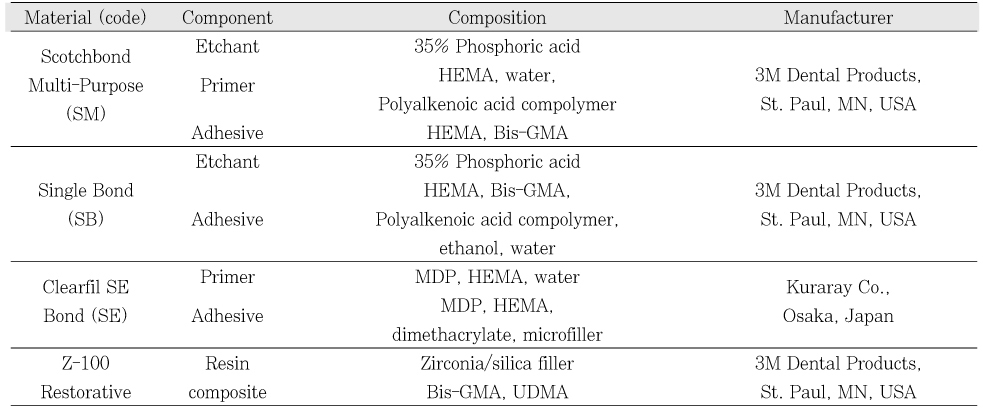
Forty-five caries-free human molars extracted for the periodontal reasons were used in this study. The teeth were stored frozen after extraction until use. Initially, the teeth were embedded in epoxy resin using acrylic ring. Then, teeth were divided into three groups of fifteen for each control and experimental groups. Three dentin bonding systems and one resin composite were used in this study and their components, manufacturers were listed in table 1.
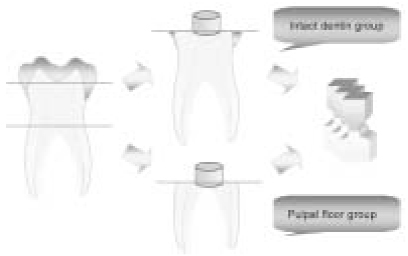
(1) Control group - Intact dentin group
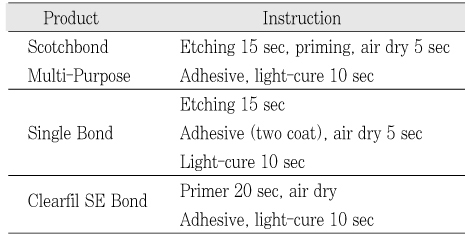
The teeth were sectioned to remove occlusal enamel using a Low speed diamond saw (ISOMET; Buhler, USA) and exposed dentin surface was ground with #600-grit SiC paper serially under a stream of running water. Three dentin bonding systems, Scotchbond Multi-Purpose(3M, USA), Single Bond(3M, USA), Clearfil SE Bond(Kuraray, Japan), were applied according to manufacturer's instruction (Table 2). Then, teflon mold(diameter : 6mm, height : 2mm) was placed on bonding area and filled with resin composite(Z-100; 3M, USA) and light-cured (Spectrum 800; Dentsply, USA) for 40 sec.
(2) Experimental group
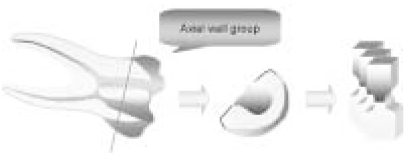
Initially, the access cavity preparation was performed using high-speed diamond point under copious water spray. Following this, pulp tissue in pulp chamber was carefully removed using endodontic file. The teeth were then stored in 5% NaOCl for 1 hour (Figure 1, 2).
1) Axial wall group
The teeth were sectioned mesio-distally parallel to the long axis of teeth using Low speed diamond saw. Then, three dentin bonding systems were applied to axial wall area in pulp chamber according to manufacturer's instruction and Z-100 was filled in pulp chamber and light-cured for 40 sec.
2) Pulpal floor group
The teeth were sectioned at pulpal floor level perpendicular to the long axis of teeth and ground with #600-grit SiC paper serially. Three dentin bonding systems were applied according to manufacturer's instruction. Then, teflon mold was placed on the cured bonding resin and filled with Z-100 and light-cured for 40 sec.
All restored specimens were stored in distilled water at 37℃ for 24 hours. The teeth were serially sectioned into slice of mean thickness 0.7 mm perpendicular to the bonded surface using a Low speed diamond saw under copious water supply. These specimens were then trimmed into an hour-glass shape to give a bonded surface of 1 mm2 using a high speed diamond point (#104; Shofu, Japan). The trimmed specimens were attached to testing zig with cyanoacrylate adhesive(Zapit; MDS Products Co., USA), then subjected to tensile forces in a universal testing machine(EZ Test, Shimadzu, Japan) at a cross head speed 1 mm/min.
For the evaluation of the morphology at the resin-dentin interface, specimens used for hybrid layer observation were bonded with each system in the same manner as for the micro-tensile bond test. One day later, the teeth were sectioned perpendicular to bonding surface and then embedded in epoxy resin. Then the sectioned surfaces were serially ground to #2000-grit SiC papers, and highly polished with a diamond paste. The specimens were subjected to 10% phosphoric acid treatment for 3~5 sec27). Then specimens were rinsed with water for 15 sec and treated with 5% sodium hypochlorite for 5 min28). After being extensively rinsed with water, the treated specimens were air dried, gold-sputter-coated and examined in SEM(S-2300; Hitachi Co., Japan).
The maximum tensile force was divided by the area of the specimen and the measured micro-tensile bond strength values were analysed using ANOVA/ Newman-Keuls multiple comparisons test at a significance level of 0.05.
III. RESULTS
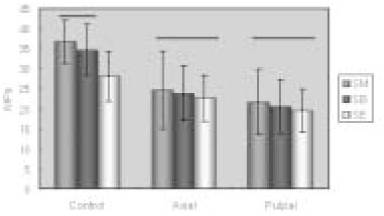
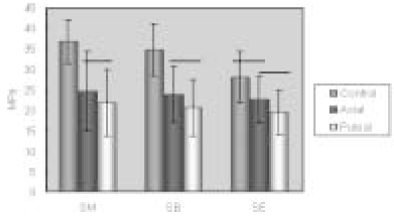
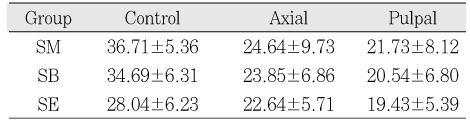
The micro-tensile bond strengths of Scotchbond Multi-Purpose(SM), Single Bond(SB) and Clearfil SE Bond(SE) with intact dentin, axial wall and pulpal floor are shown in Table 3.
As shown in Table 3, the micro-tensile bond strength of all dentin bonding systems were decreased in order of control group, axial wall group, pulpal floor group. In control group, SM and SB showed significantly higher bond strength than SE(p<0.05). However, in axial wall and pulpal floor groups, there were no significant difference between dentin bonding systems.
The micro-tensile bond strengths of SM and SB were much higher in control group than that of axial wall and pulpal floor group (p<0.05).
For SE, control group showed significantly higher bond strength than axial wall and pulpal floor group, also pulpal floor group showed significantly lower bond strength than control and axial wall group(p<0.05).
The micro-tensile bond strengths according to locations of dentin and to dentin bonding systems are showed in Fig. 3 and 4.
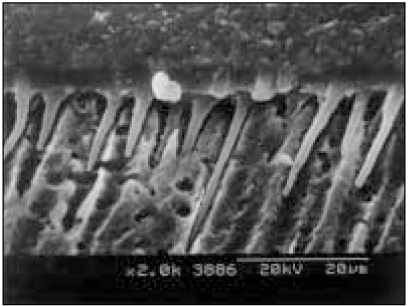
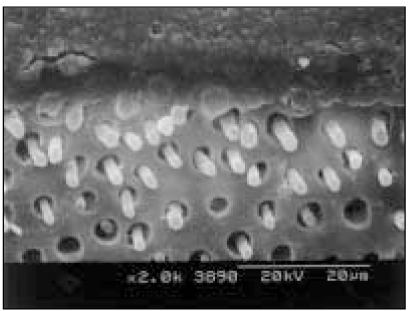
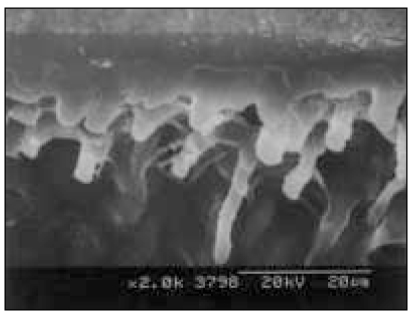
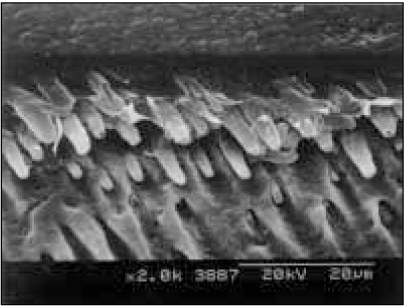
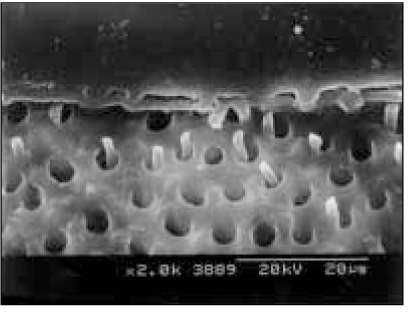
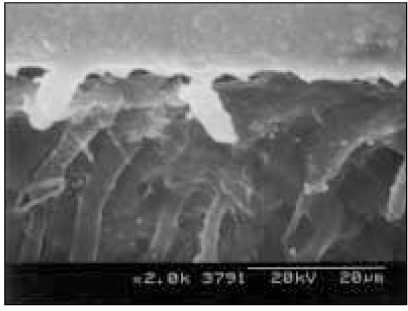
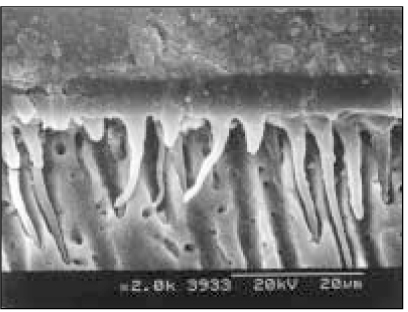
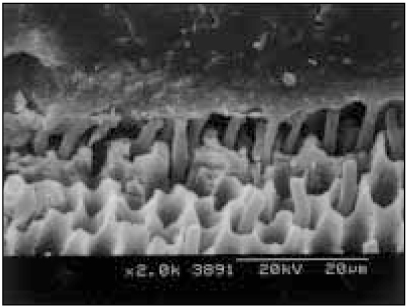
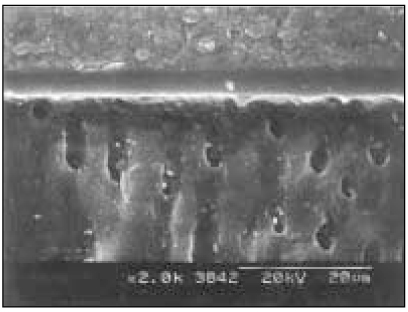
In SEM observation, there were several notable regional differences in dentin structure. The tubule density was much lower on the floor of the pulp chamber compared with the intact dentin. For axial wall and pulpal floor group, which were treated with 5% NaOCl, predentin matrix was removed, leaving a smoother, mineralized matrix for bonding. This lead to smoother interfaces. Most of the bond failures occurred at the top of the hybrid layer. For SM, the hybrid layer thickness ranged from between 4-5 µm. Resin tags were clearly observed with the typical funnel shape at the top of the tubules and more than 10 µm in length. SB exhibited similar pattern to SM but the thickness of the hybrid layer was thin (2~3 µm) and the length of resin tag was relatively short (5~7 µm). For SE, the thickness of the hybrid layer was measured between 4-5 µm. Resin tags were not observed in the pulpal floor dentin. In other regions where resin tags were present, they were thin and pooly formed (Figure 5, 6, 7, 8, 9, 10, 11, 12, 13).
IV. Discussion
Previous studies reported that endodontically treated teeth are not reinforced by a full coverage crown combined with post and core systems29-30). Those studies stated that preservation of the tooth structure is an important factor to prolong the longevity of the tooth. In addition, minimizing the amount of tooth structure loss is reported to be essential for a favorable prognosis16). With development of adhesive dentistry, the weakened tooth structure can be reinforced by the use of resin bonding system after endodontic treatment.
However, both the composition and morphology of pulp chamber dentin are different from those of intact dentin. At the surface of the dentin, or the dentino-enamel junction, dentinal tubules range between 15,000 and 20,000/mm2. At the pulpal surface, the number of dentinal tubules increases three fold to 45,000 to 60,000/mm2 and the tubule diameter increases. Dentin permeability is greatest on thin axial surfaces, particularly mesial surfaces16). Also, with aging or in response to noxious stimuli, secondary dentin is laid down at the pulpal end of the primary dentin. This secondary dentin has fewer dentinal tubules, irregular orientation, and lower permeability than primary dentin. Especially, most of pulpal floor composed with calcified secondary dentin.
In addition, pulp chamber dentin might be affected by root canal irrigants and disinfectants during endodontic procedure. NaOCl is one of the most common root canal irrigants used for debridement, lubrication, destruction of microbes and dissolution of organic tissues2). Nikaido et al7) reported that NaOCl treatment adversely affected the bond strengths to dentin. In contrast, others reported that NaOCl treatment improved the adhesion of the bonding system to dentin when using phosphoric acid31).
In this study, the micro-tensile testing method was used for regional bond strength of pulp chamber dentin. Since, each region of pulp chamber dentin is too small to permit conventional bond test and micro-tensile testing method has been shown that the bonded interface of small specimens distributes stress better, which can result in more consistent adhesive failures and higher apparent bond strengths. It also allows for more specimens to be generated from the same tooth. One of the disadvantage of the test is that small bond strengths are difficult to measure because specimens can be broken easily during preparation32).
The dentin bonding systems used in this study represent the conventional bonding system(SM), self-priming system(SB) and self-etching system(SE). In conventional and self-priming system, the etchant removes the smear layer and demineralizes dentin, and the adhesive resin penetrate the etched dentin. However, the acid component of the self-etching primer mildly demineralizes dentin so that it does not remove smear plugs completely. At the same time, the primer component modifies the demineralized dentin and the bonding resin infiltrates the primed dentin.
The micro-tensile bond strength of pulp chamber dentin(axial wall, pulpal floor) was lower than that of intact dentin(control) in all dentin bonding systems. This result suggests that endodontic treatment which use chemical irrigant such as NaOCl interfere the adhesion of bonding system to dentin. It is thought that residual NaOCl may interfere with polymerization of the bonding resin due to oxygen generation. For SM and SB, micro-tensile bond strength was decreased so much in pulp chamber dentin, but SE showed relatively gradual decreation though there were no significant difference between dentin bonding systems in pulp chamber dentin. Several factors could explain this difference between wet bonding system(SM, SB) and self-etching system(SE). The self-etching primer of SE might not be effective for removing degenerated dentin and residual NaOCl, while the etchant of SM, SB might be strong enough to remove both. The remained smear layer after self-etching primer application might prevent oxygen from penetrating through dentinal tubules from the pulp chamber dentin, while the removal of the smear layer by the etchant treatment of SM, SB might allow oxygen penetration. In highly calcified pulpal floor dentin, self-etching primer might not etch mineral enough to infiltrate by monomers to form a hybrid layer. Self-etching primer could potentially eliminate the risk of overetching dentin. Overetching leaves a layer of demineralized dentin below the hybrid layer, leading to long-term weakening of the dentin bond and subsequent leakage33). Nikaido et al7) have shown that bond strength of self-priming system was significantly decreased, while self-etching system did not affected by NaOCl treatment. Ishizuka et al34), on the other hand, found that the bond strength of self-etching system decreased following NaOCl treatment whereas that of wet bonding system did not change. In this study, although bond strengths of all dentin bonding systems were affected by NaOCl, self-etching system was less affected by NaOCl treatment. It is thought that as the selfe-tching primer acts on the dentin surface by modifying the smear layer, and partially dissolved smear plugs may remain within the tubules, lowering the dentinal permeability. Therefore residual chemical irrigants and their products in dentinal tubules are main reason that affect the penetration of resin into the dentin structure and/or the polymerization of the monomer in the demineralized dentin.
In SEM observation, the thickness of hybrid layer or the length of resin tag were not affect the bond strength, supporting previous study that there is no correlation between bond strength and hybrid layer thickness35). But smoother bonding interfaces due to use of NaOCl as well as lower dentinal tubule density were thought another reason of lower bond strength in pulp chamber dentin.
Although the bond strength of SE was slightly lower than that of SM, SB in pulp chamber dentin, the intent of use of adhesive resins inside the pulp chamber is to seal the root canal to prevent microleakage of oral microorganisms and their products, then high bond strength are not required, because the correlation between microleakage and bond strength is not high36). Rather the use of adhesive system that is simple, easily retreatable, and technique-insensitive would be a good choice.
In addition, we tried to reduce the C-factor(cavity configuration factor) in order to exclude the effect of C-factor that may affect the bond strength37). For instance, in control and pulpal floor group we made flat dentin surface, also dentin bonding systems were applied only to the axial wall of pulp chamber in axial wall group. However, when the pulp chamber is restored with resin composite, special care must be taken to reduce C-factor which may cause microleakage.
In this study, endodontic procedure prove to have an adverse effect on bond strengths of composite. Wet bonding system was more influenced by chemical irrigant than self-etching system even though bond strengths of wet bonding system were slightly higher. Then, for the recovery of bond strength in endodontically treated teeth, the use of anti-oxidant such as sodium ascorbate before resin bonding may be considerable.
V. CONCLUSION
In restoring endodontically treated teeth, treatment goals must be based upon a multitude of factors that include occlusion, patient's function, tooth position, periodontal status, prosthetic needs, amount of remaining tooth structure, and root morphology. Recent development of adhesive dentistry enables a non-vital tooth to be restored with minimal intervention.
This study was designed to evaluate the effect of endodontic treatment on bond strength to pulp chamber dentin. From the results of this study, we can conclude as follows;
The micro-tensile bond strengths of all dentin bonding systems were decreased in order of control (intact dentin) group, axial wall group, and pulpal floor group.
In control group, SM and SB showed significantly higher bond strengths than SE (p<0.05).
SM and SB showed significantly lower bond strengths in axial wall and pulpal floor group when compared with control group(p<0.05). But SE showed significantly lower bond strength only in pulpal floor group than control group(p<0.05).
In axial wall and pulpal floor group, there were no significant differences between dentin bonding systems.
In SEM observation, the tubule density was much lower on the floor of the pulp chamber compared with the intact dentin. For axial wall and pulpal floor group, which were treated with 5% NaOCl, the smoother bonding interface was shown. There was no correlation between the bond strength and the thickness of hybrid layer.
This study suggests that the procedure of endodontic treatment using chemical irrigants can adversely affect the adhesion to dentin, but self-etching system is less affected than wet boding system which needs total etching procedure. Therefore, proper selection of dentin bonding system is important in restoring endodontically treated teeth with resin composite.
- 1. Nakabayashi N, Pashley DH. Hybridization of dental hard tissues. 1998;Quintessence Publishing; 95-107.
- 2. West JD, Roane JB. Cleaning and shaping the root canal system. Pathways of the pulp. 1998;7th ed. Mosby; 203-257.
- 3. Heling I, Chandler NP. Antimicrobial effect of irrigant combination within dentinal tubules. Int Endod J. 1998;31: 8-14.ArticlePubMed
- 4. Haak R, Wicht MJ, Noack MJ. Does chemomechanical caries removal affect dentine adhesion? Eur J Oral Sci. 2000;108: 449-455.ArticlePubMedPDF
- 5. Cox CF, Hafez AA, Akimoto N, Otsuki M, Suzuki S, Tarim B. Biocompatibility of primer, adhesive and resin composite systems on non-exposed and exposed pulps of non-human primate teeth. Am J Dent. 1998;11(Spec No):S55-S63.PubMed
- 6. Grossman LI, Meiman BW. Solution of pulp tissue by chemical agents. J Am Dent Assoc. 1941;28: 223-225.Article
- 7. Nikaido T, Takano Y, Sasafuchi Y, Burrow MF, Tagami J. Bond strengths to endodontically-treated teeth. Am J Dent. 1999;12: 177-180.PubMed
- 8. Inai N, Kanemura N, Tagami J, Watanabe LG, Marshall SJ, Marshall GW. Adhesion between collagen depleted dentin and dentin adhesives. Am J Dent. 1998;11: 123-127.PubMed
- 9. Pioch T, Kobaslija S, Schagen B, Gotz H. Interfacial micromorphology and tensile bond strength of dentin bonding systems after NaOCl treatment. J Adhes Dent. 1999;1: 135-142.PubMed
- 10. Titley KC, Torneck CD, Ruse ND, Krmec D. Adhesion of a resin composite to bleached and unbleached human enamel. J Endod. 1993;19: 112-115.ArticlePubMed
- 11. Xie J, Powers JM, McGuckin RS. In vitro bond strength of two adhesives to enamel and dentin under normal and contaminated conditions. Dent Mater. 1993;9: 295-299.ArticlePubMed
- 12. Powers JM, Finger WJ, Xie J. Bonding of composite resin to contaminated human enamel and dentin. J Prosthodont. 1995;4: 28-32.ArticlePubMed
- 13. Perdigao J, Lopes M, Geraldeli S, Lopes GC, Garcia-Godoy F. Effect of a sodium hypochlorite gel on dentin bonding. Dent Mater. 2000;16: 311-323.ArticlePubMed
- 14. Daumer KM, Khan AU, Steinbeck MJ. Chlorination of pyridinium compounds. Possible role of hypochlorite, n-chloramines, and chlorine in the oxidation of pyridinoline cross-links of articular cartilage collagen type II during acute inflammation. J Biol Chem. 2000;275: 34681-34692.PubMedPMC
- 15. Nikaido T, Nakabayashi N. Relationship between polymerization and adhesion to teeth. Adhes Dent. 1988;6: 229-234.
- 16. Wagnild GW, Mueller KI. Restoration of the endodontically treated tooth. Pathways of the pulp. 1998;7th ed. Mosby; 691-717.
- 17. Gutmann JL. The dentin-root complex: anatomic and biologic considerations in restoring endodontically treated teeth. J Prosthet Dent. 1992;67: 458-467.ArticlePubMed
- 18. Helfer AR, Melnick S, Schilder H. Determination of the moisture content of vital and pulpless teeth. Oral Surg Oral Med Oral Pathol. 1972;34: 661-670.ArticlePubMed
- 19. Berkovitz BK, Holland GR, Moxham BJ. A color atlas and textbook of oral anatomy, Histology and embryology. 1992;2nd ed. Wolfe Publishing Ltd; 130-145.
- 20. Fogel HM, Marchall FJ, Pashley DH. Effects of distance from the pulp and thickness on the hydraulic conductance of human radicular dentin. J Dent Res. 1988;67: 1381-1385.ArticlePubMedPDF
- 21. Burrow MF, Sano H, Nakajima M, Harada N, Tagami J. Bond strength to crown and root dentin. Am J Dent. 1996;9: 223-229.PubMed
- 22. Saupe WA, Gluskin AH, Radke RA Jr. A comparative study of fracture resistance between morphologic dowel and cores and a resin-reinforced dowel system in the intraradicular restoration of structurally compromised roots. Quintessence Int. 1996;27: 483-491.PubMed
- 23. Ausiello P, De Gee AJ, Rengo S, Davidson CL. Fracture resistance of endodontically-treated premolars adhesively restored. Am J Dent. 1997;10: 237-241.PubMed
- 24. Eakle WS. Fracture resistance of teeth restored with class II bonded composite resin. J Dent Res. 1986;65: 149-153.ArticlePubMedPDF
- 25. Nakabayashi N, Kojima K, Masuhara E. The promotion of adhesion by the infiltration of monomers into tooth substrate. J Biomed Mater Res. 1982;16: 265-273.ArticlePubMed
- 26. Sano H, Shono T, Hidekazu S, Takatsu T, Ciucchi B, Carvalho R, Pashley DH. Relationship between surface area for adhesion and tensile bond strength-evaluation of a microtensile bond test. Dent Mater. 1994;10: 236-240.ArticlePubMed
- 27. Gwinnett AJ, Kanca J. Micromorphology of the bonded dentine interface and its relationship to bond strength. Am J Dent. 1992;5: 73-77.PubMed
- 28. Sano H, Takatsu T, Ciucchi B, et al. Leakage within the hybrid layer. Oper Dent. 1995;20: 18-25.PubMed
- 29. Guzy GE, Nicholls JI. In vitro comparison of intact endodontically treated teeth with and without endopost reinforcement. J Prosthet Dent. 1979;42: 39-44.PubMed
- 30. Sorensen JA, Engleman MJ. Ferrule design and fracture resistance of endodontically treated teeth. J Prosthet Dent. 1990;63: 529-536.ArticlePubMed
- 31. Hosoda H, Sugizaki J, Nakajima M, Shono T, Tagami J. A study on the mechanism of bonding between resin and dentin Part 1. Bonding to dentin treated with sodium hypochlorite. Jpn J Conserv Dent. 1993;36: 1054-1058.
- 32. Pashley DH, Sano H, Ciucchi B, Yoshiyama M, Carvalho RM. Adhesion testing of dentin bonding agents: A review. Dent Mater. 1995;11: 117-125.ArticlePubMed
- 33. Haller B. Recent developments in dentin bonding. Am J Dent. 2000;13: 44-50.PubMed
- 34. Ishizuka T, Kataoka H, Yoshioka T, Suda H, Iwasaki N, Takahashi H, Nishimura F. Effect of NaOCl treatment on bonding to root canal dentin using a new evaluation method. Dent Mater J. 2001;20: 24-33.PubMed
- 35. Yoshiyama M, Carvalho RM, Sano H, Horner JA, Brewer PD, Pashley DH. Regional bond strengths of resins to human root dentine. J Dent. 1996;24: 435-442.ArticlePubMed
- 36. Hilton TJ. Can modern restorative procedures and materials reliably seal cavities? In vitro observations. Trans Acad Dent Mater. 1998;12: 21-71.
- 37. Davidson CL, De Gee AJ, Feilzer AJ. The competition between the composite-dentin bond strength and the polymerization contraction stress. J Dent Res. 1984;63: 1396-1399.ArticlePubMedPDF
REFERENCES
Tables & Figures
REFERENCES
Citations
Citations to this article as recorded by 
 Cite
Cite XML Download
Regional bond strength of dentin bonding systems to pulp chamber dentin
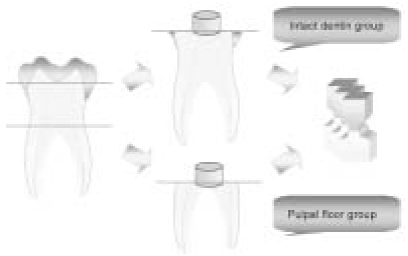
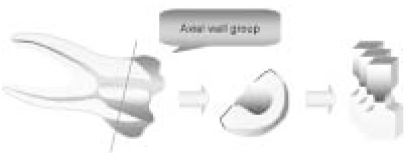
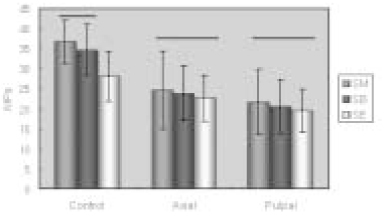
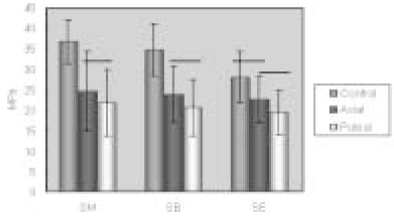
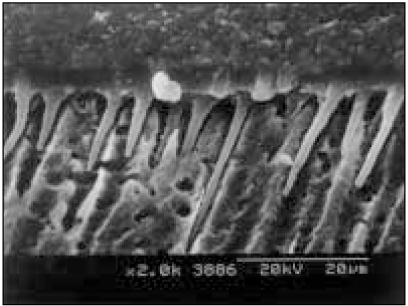
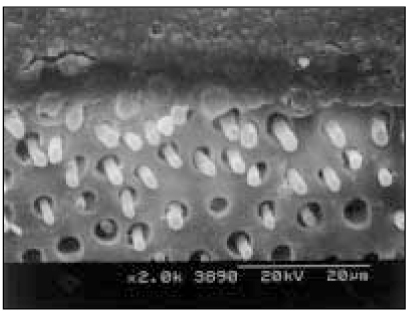
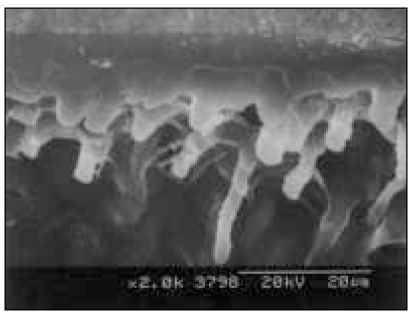
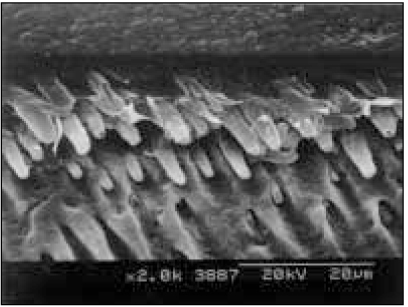
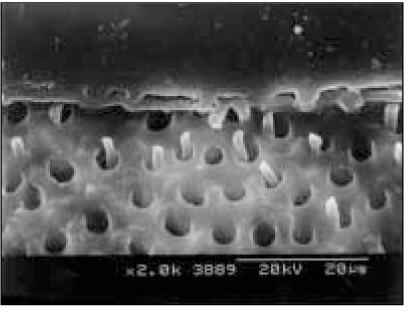
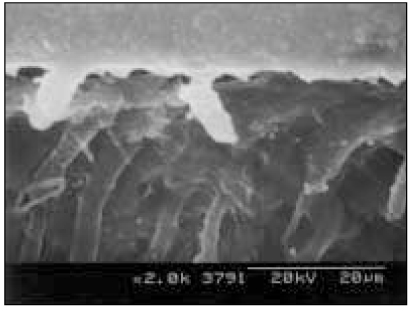
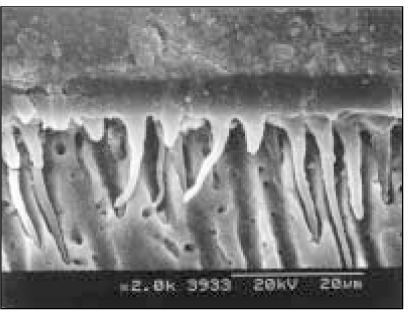
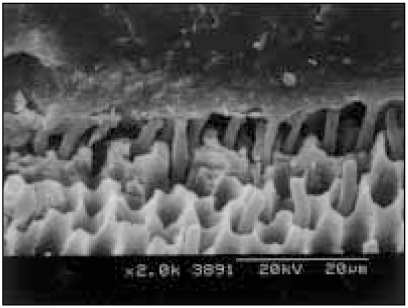
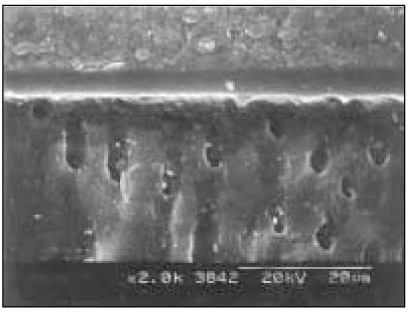
Fig. 1
Specimen preparation for micro-tensile bond strength test (Intact dentin group, Pulpal floor group)
Fig. 2
Specimen preparation for micro-tensile bond strength test (Axial wall group)
Fig. 3
Micro-tensile bond strengths according to location of dentin
Fig. 4
Micro-tensile bond strengths according to location of dentin
Fig. 5
SEM photograph of the adhesive interface of SM-control group(×2000)
Fig. 6
SEM photograph of the adhesive interface of SM-axial wall group(×2000)
Fig. 7
SEM photograph of the adhesive interface of SM-pulpal floor group(×2000)
Fig. 8
SEM photograph of the adhesive interface of SB-control group(×2000)
Fig. 9
SEM photograph of the adhesive interface of SB-axial wall group(×2000)
Fig. 10
SEM photograph of the adhesive interface of SB-pulpal floor group(×2000)
Fig. 11
SEM photograph of the adhesive interface of SE-control group(×2000)
Fig. 12
SEM photograph of the adhesive interface of SE-axial wall group(×2000)
Fig. 13
SEM photograph of the adhesive interface of SE-pulpal floor group(×2000)
Fig. 1
Fig. 2
Fig. 3
Fig. 4
Fig. 5
Fig. 6
Fig. 7
Fig. 8
Fig. 9
Fig. 10
Fig. 11
Fig. 12
Fig. 13
Regional bond strength of dentin bonding systems to pulp chamber dentin
Materials used in this study
Bis-GMA=Bisphenol-A glycidyl methacrylate
HEMA=Hydroxyethylmethacrylate
MDP=Methacryloyloxydecyl dihydrogen phosphate
Instruction for dentin boding systems
Micro-tensile bond strength of each bonding system to dentin(MPa±S.D, n=10)
Table 1
Materials used in this study
Bis-GMA=Bisphenol-A glycidyl methacrylate HEMA=Hydroxyethylmethacrylate MDP=Methacryloyloxydecyl dihydrogen phosphate
Table 2
Instruction for dentin boding systems
Table 3
Micro-tensile bond strength of each bonding system to dentin(MPa±S.D, n=10)


