
 KACD

Search
- Page Path
- HOME > Search
Research Articles
- Optimizing post-space drying: insights from an in vitro study using standardized three-dimensional-printed models
- Takanori Sakai, Hideshi Sekine, Syuntaro Nomoto, Mamoru Yotsuya, Esha Mukherjee, Hidehiko Watanabe
- J Korean Acad Conserv Dent ;Published online September 18, 2026
- DOI: https://doi.org/10.5395/rde.2026.51.e43 [Epub ahead of print]
-
 Abstract
 PDF
- Objectives
This study aimed to evaluate the efficiency of four post-space drying methods using standardized three-dimensional (3D)-printed resin tooth specimens, with emphasis on clinical implications for adhesive post retention. Methods: Maxillary central incisor models with post spaces of three diameters (1.4, 1.7, 2.0 mm) and three lengths (6.0, 9.0, 12.0 mm) were digitally designed and 3D-printed. A total of 81 specimens (n = 9 per post-space condition) were evaluated. Four drying methods were tested: air-syringe (AS), post-air-blow (PAB), paper-point (PP), and root-canal suction (RCS). Remaining moisture amount and content were quantified gravimetrically and analyzed using two-way and oneway analysis of variance with Tukey honestly significant difference (α = 0.05). Results: Drying performance depended on both geometry and technique. AS consistently left greater remaining moisture, whereas PP and RCS showed stable, efficient drying. PAB was generally effective but technique-sensitive in long, narrow geometries. Conclusions: Standardized 3D-printed models enabled reproducible evaluation of post-space drying and revealed clinically relevant limitations of commonly used methods. Selecting drying protocols tailored to post-space geometry may reduce residual moisture prior to adhesive cementing.
- 720 View
- 15 Download

- Nanoleakage of apical sealing using a calcium silicate-based sealer according to canal drying methods
- Yoon-Joo Lee, Kyung-Mo Cho, Se-Hee Park, Yoon Lee, Jin-Woo Kim
- Restor Dent Endod 2024;49(2):e20. Published online April 19, 2024
- DOI: https://doi.org/10.5395/rde.2024.49.e20
-
Abstract
PDF
Objectives This study investigated the nanoleakage of root canal obturations using calcium silicate-based sealer according to different drying methods.
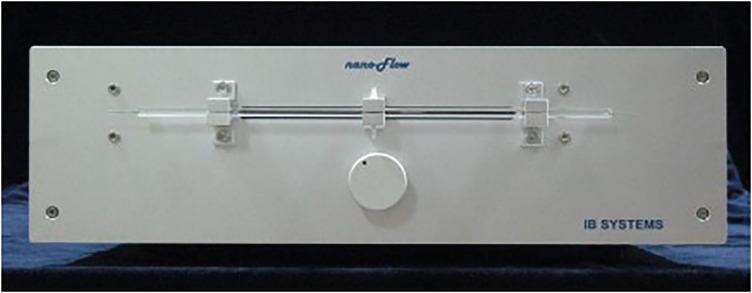
Materials and Methods Fifty-two extracted mandibular premolars with a single root canal and straight root were selected for this study. After canal preparation with a nickel-titanium rotary file system, the specimens were randomly divided into 4 groups according to canal drying methods (1: complete drying, 2: blot drying/distilled water, 3: blot drying/NaOCl, 4: aspiration only). The root canals were obturated using a single-cone filling technique with a calcium silicate–based sealer. Nanoleakage was evaluated using a nanoflow device after 24 hours, 1 week, and 1 month. Data were collected twice per second at the nanoscale and measured in nanoliters per second. Data were statistically analyzed using the Kruskal-Wallis and Mann–Whitney
U -tests (p < 0.05).Results The mean flow rate measured after 24 hours showed the highest value among the time periods in all groups. However, the difference in the flow rate between 1 week and 1 month was not significant. The mean flow rate of the complete drying group was the highest at all time points. After 1 month, the mean flow rate in the blot drying group and the aspiration group was not significantly different.
Conclusions Within the limitations of this study, the canal drying method had a significant effect on leakage and sealing ability in root canal obturations using a calcium silicate-based sealer. Thus, a proper drying procedure is critical in endodontic treatment.
-
Citations
Citations to this article as recorded by
- Effects of interactions between sealers and irrigants on the physicochemical and surface characteristics of endodontic sealers
Hye-In Kim, Yeon-Ju You, Yemi Kim, Jin-Woo Kim, Young-Eun Jang
Clinical Oral Investigations.2026;[Epub] CrossRef - Assessment of Shear Bond Strength of MTA and ApaCal ART Liners to a Universal Bonding Agent: An In Vitro Study
Angel Kurian, Banibrata Lahiri, Archana A Thomas, Gautham Anilkumar, Fawaz Pullishery, Reshma Raju
The Journal of Contemporary Dental Practice.2026; 27(3): 254. CrossRef - Critical analysis of the “nanoleakage concept” in endodontics: a narrative review
José Luis Álvarez-Vásquez, Daniel Chavarría-Bolaños
Frontiers in Dental Medicine.2026;[Epub] CrossRef
- Effects of interactions between sealers and irrigants on the physicochemical and surface characteristics of endodontic sealers
- 4,393 View
- 145 Download
- 2 Web of Science
- 3 Crossref
 First
 Prev



