-
Clinical outcomes of tooth autotransplantation: a systematic review and meta-analysis of survival
-
Jasmine Wong, Elise Hoi Wan Fok, Kar Yan Li, Chengfei Zhang, Gary Shun Pan Cheung
-
Restor Dent Endod 2026;51(2):e17. Published online April 2, 2026
-
DOI: https://doi.org/10.5395/rde.2026.51.e17
-
-
 Abstract Abstract
 PDF PDF PubReader PubReader ePub ePub
- Objectives
Autotransplantation is a procedure that involves the extraction and transplantation of a tooth from one site to another within the same individual. This systematic review and meta-analysis aimed to investigate how clinical outcomes of autotransplanted teeth evolve over time and the principal reasons for extraction.
Methods
Studies were identified from five databases. A meta-analysis was performed to estimate the survival rates in the short-term (1 to ≤4 years), medium-term (>4 to ≤8 years), and long-term (>8 years) periods. Subgroup analysis was performed for age and root development. Risks of bias, reasons for extraction, and patient-reported outcome measures were evaluated.
Results
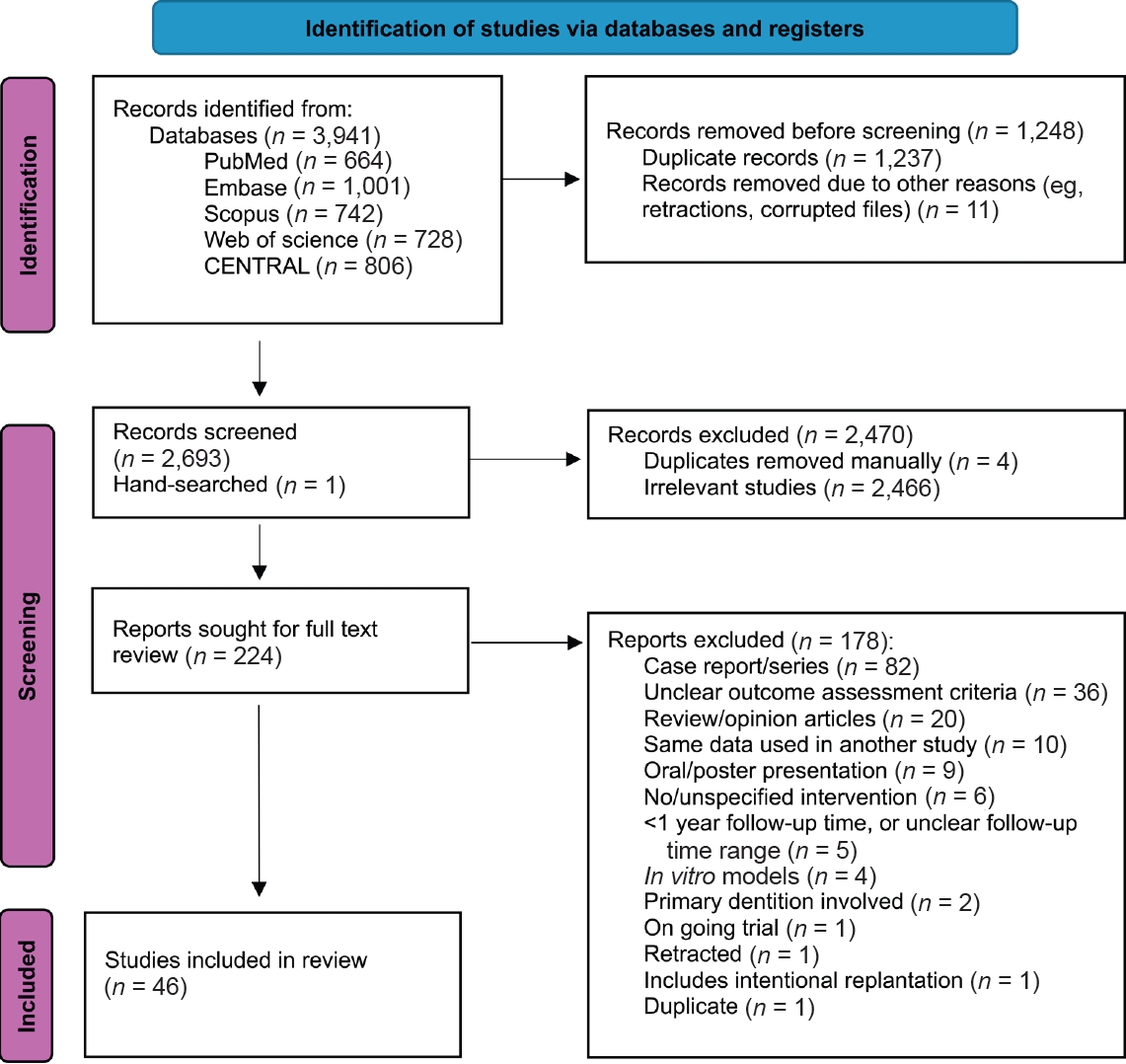
Of the 3,941 reports initially identified, 46 were included. The estimated short-, medium-, and long-term survival rates were 96.31% (95% confidence interval [CI], 94.80–97.82), 88.23% (95% CI, 85.59–90.87), and 84.80% (95% CI, 76.70– 92.91), respectively. There were no significant differences in outcomes between age and root development groups. The most common reason for tooth loss was root resorption. High patient satisfaction rates were reported.
Conclusions
Autotransplanted teeth exhibit high survival rates in the short- to medium-term. Minimizing root surface damage and excluding pulpal contaminants may promote longevity. The procedure appeared equally successful for teeth at different stages of root development and across various age groups.
|

 KACD
KACD